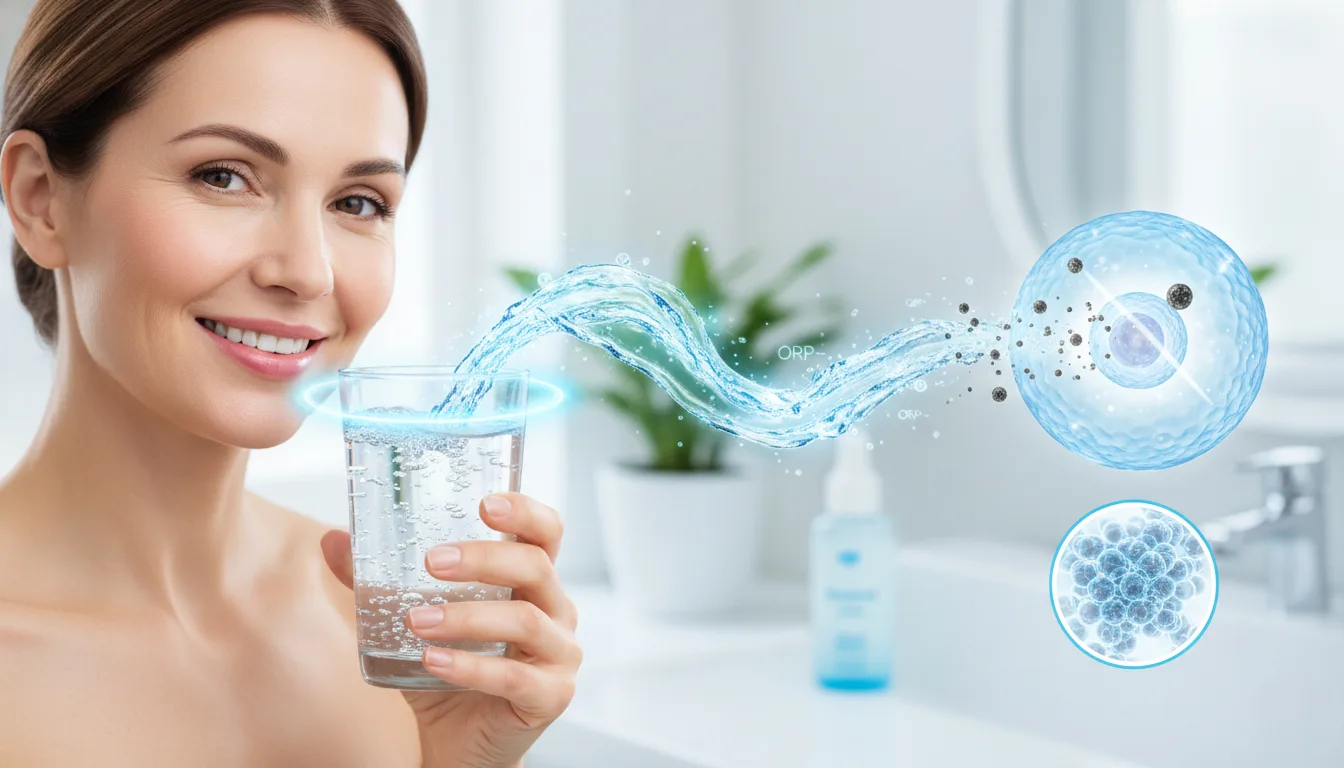
Ageing at the cellular level is driven in part by oxidative stress — the accumulated damage caused when reactive oxygen species outpace the body capacity to neutralise them. Those reactive molecules attack lipids, proteins and DNA, and the damage compounds over decades.
Antioxidants are the counterweight. Most of ours come from diet and from the body own enzyme systems. Water carrying a negative oxidation-reduction potential enters this picture as a subject of active research — and it is worth setting out what is established and what is not.
ORP: What the Number Means
Oxidation-reduction potential is measured in millivolts and describes whether a liquid tends to donate electrons (negative) or accept them (positive).
Tap and bottled water typically measure between +200 and +400 mV. Water from a Singer ioniser measured −252 mV in an accredited laboratory test, alongside a pH of 9.5. That negative value is not a marketing figure; it reflects dissolved molecular hydrogen produced during electrolysis, and it can be verified with an ORP meter.
What the Research on Molecular Hydrogen Shows
Interest in hydrogen-rich water accelerated after a 2007 paper in Nature Medicine reported that molecular hydrogen acted as a selective antioxidant, preferentially neutralising the most damaging reactive species while leaving beneficial signalling molecules intact. Several hundred studies have followed.
Some small human trials have reported effects on markers of oxidative stress. Others have found little. Sample sizes are generally small, protocols vary, and long-term outcome data is thin. The honest position is that this is a promising and genuinely active field, not a settled one — and that no drinking water has been demonstrated to slow biological ageing in humans.
Claims We Will Not Make
Three statements circulate widely in this category, and none of them holds up:
That ionised water is many times more powerful than vitamin C or green tea. Antioxidant capacity is not comparable across such different substances in that way, and the multipliers quoted have no source.
That smaller water clusters penetrate skin cells several times faster. Hydrogen-bonded clusters in liquid water reorganise within picoseconds; no stable small-cluster structure survives to be absorbed.
That drinking alkaline water alkalises the body. Blood pH is regulated within 7.35 to 7.45 regardless of diet.
We would rather have a smaller, defensible case than a large indefensible one.
What Genuinely Helps Skin and Energy
The most reliable contribution water makes to how you look and feel is unglamorous: adequate hydration. Mild dehydration measurably affects concentration, mood and perceived fatigue, and skin hydration status affects elasticity and appearance.
Most people fall short of their intake target simply because their water is unappealing. Chlorinated tap water tastes of chlorine; RO water tastes flat. Filtered, mineral-retaining water at pH 9.5 tastes clean and smooth, and the practical result is that people finish the glass and pour another. Two litres a day of water you enjoy beats one litre of water you tolerate.
There is a second, quieter benefit: reducing what you are exposed to. Singer filtration removes chlorine, heavy metals, bacteria and viruses at 99.9%, and storing your water in glass rather than plastic removes microplastic and BPA exposure from your daily routine. Lowering a known exposure is a more solid proposition than raising a speculative one.
The Practical Case
A Singer ioniser runs seven filtration stages, retains calcium, magnesium and potassium rather than discarding them, produces around 295 litres a day, and is certified to NSF 42, 53, 58, 372 and 401 with the WQA Gold Seal and CE marking. The device carries a lifetime warranty.
You can read how the technology works, compare the Gold and Black models, or request a free water test.
This article is general information and is not medical advice.