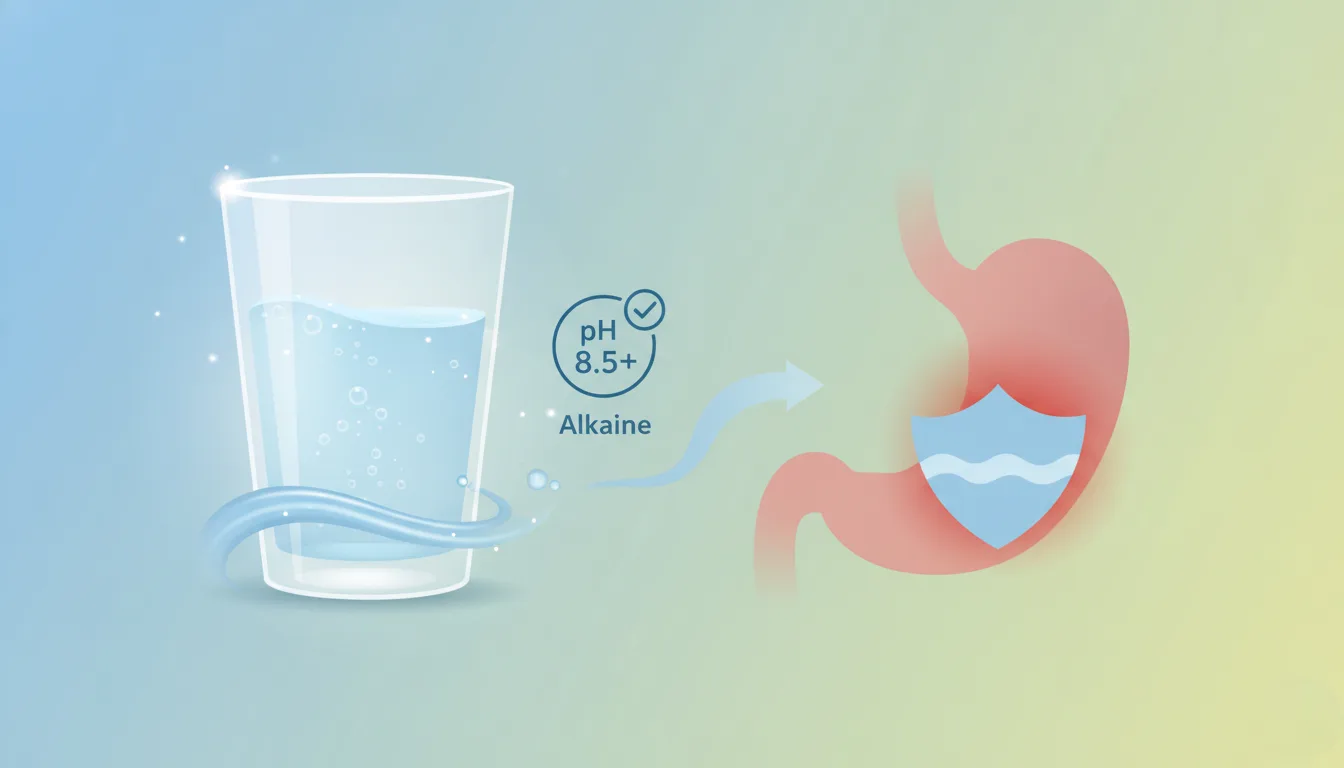
Heartburn and acid reflux are among the most common complaints in modern life. When stomach acid escapes upward into the oesophagus, the result ranges from mild discomfort after a heavy meal to a chronic condition that disrupts sleep and diet. Before reaching for medication, many people ask a reasonable question: can changing the water you drink help?
For once, this is a claim with a specific piece of published research behind it — and it is worth understanding precisely what that research does and does not show.
The Pepsin Finding
Pepsin is a digestive enzyme produced in the stomach. In reflux, pepsin travels up with the refluxed acid and can remain in the tissue of the oesophagus and throat, where it stays capable of causing damage whenever the local environment becomes acidic again. It is a large part of why reflux symptoms persist between episodes.
In 2012, Koufman and Johnston published a study in the Annals of Otology, Rhinology & Laryngology examining what alkaline water does to pepsin. They found that water at pH 8.8 irreversibly deactivated human pepsin in vitro, and that it also had useful acid-buffering capacity — considerably more than ordinary water.
That is a genuine, citable, peer-reviewed result. It is also a laboratory study. It shows what happens to the enzyme in a controlled setting; it does not establish alkaline water as a treatment for reflux disease, and the authors themselves framed it as a possible adjunct rather than a therapy. If you have persistent reflux, that is a conversation for your doctor, not a water filter.
Why Ordinary Water Falls Short Here
Municipal tap water usually sits around pH 7, and a great deal of bottled water is mildly acidic — some brands measure as low as pH 5.5 to 6.5. Neither reaches the threshold in the study.
Reverse osmosis water is a particular case. RO strips the mineral content that gives water its buffering capacity, so RO output typically measures pH 6 to 7 with almost no ability to neutralise acid. For someone with reflux, that is the opposite of what is wanted.
A Singer ioniser produces water measured at pH 9.5 by an accredited laboratory — above the 8.8 threshold in the research — while retaining calcium, magnesium and potassium, which is where the buffering capacity comes from.
Practical Habits That Help
Water quality is one variable among several, and the timing advice below reflects general gastroenterological guidance rather than anything specific to alkaline water.
1. Do not drink large volumes during meals. Filling the stomach with liquid alongside food increases pressure on the lower oesophageal sphincter. Drink 30 minutes before a meal or an hour after.
2. Sip through the day rather than gulping. Spreading intake keeps you hydrated without repeatedly distending the stomach.
3. Start the morning with a glass. A glass of room-temperature water on waking clears residue that has pooled overnight and eases the stomach into the day.
4. Stay upright after eating. Two to three hours before lying down makes a larger difference than most dietary changes.
What This Adds Up To
If you have reflux, alkaline water is a low-risk change with one supporting laboratory study behind it — worth trying alongside, not instead of, medical advice. It is also simply better drinking water: filtered of chlorine and heavy metals at 99.9%, mineral-retaining, and pleasant enough that people drink more of it.
You can read how the ionisation process works, compare the Gold and Black models, or request a free water test so you can see the pH of your current supply before deciding anything.
This article is general information and is not medical advice. Persistent reflux should be assessed by a physician.